
Table of Contents
- Welcome Greetings
- “Easy Social Media” with Bernard Wozny
- Poem of the Month
- Writers’ Mingle
- Writing Tips and Techniques
- Story Kit
- Scholarship
- Books Members Written
- Story of the Month
- Join the Club
- Contact Us
Click to the PDF versions –
* Current and earlier editions
*Print a copy
Welcome Message
We are a professional association whose purpose is to foster, encourage, and educate writers and independent publishers, representing all genres, from all ages, and writing at every stage in their careers. We offer monthly meetings featuring opportunities to network with other writers, skill-building workshops, and presentations by regionally recognized authors, editors, agents, and publishers.
Our monthly meetings are held on the second Monday of each month from 7:00 to 9:00 p.m at 5501 Dewey Drive, Fair Oaks in the Fellowship Hall (straight back from the road, through the gate in the white fence). Visitors are always welcome.
In addition, we offer less formal Writers’ Mingles where all writers are welcome. Our Mingles currently meet the third Saturday of every month from 9 to 11 a.m. at the Denny’s Restaurant in Roseville (corner of Sunrise and Douglas).
SSWC is also known for its well-designed, professional “critique groups” where other writers provide intensive feedback for various creative works while in progress. Critical revision is often an essential step in creating a successful work.
Our professional library and monthly newsletter provide additional member resources.
Network and share with other writers. Be informed. Be inspired. Join us!
Celebrating our 70th Anniversary !

A new year of story telling and sharing.
Be sure to come!
“Easy Social Media”
featuring
Bernard Wozny
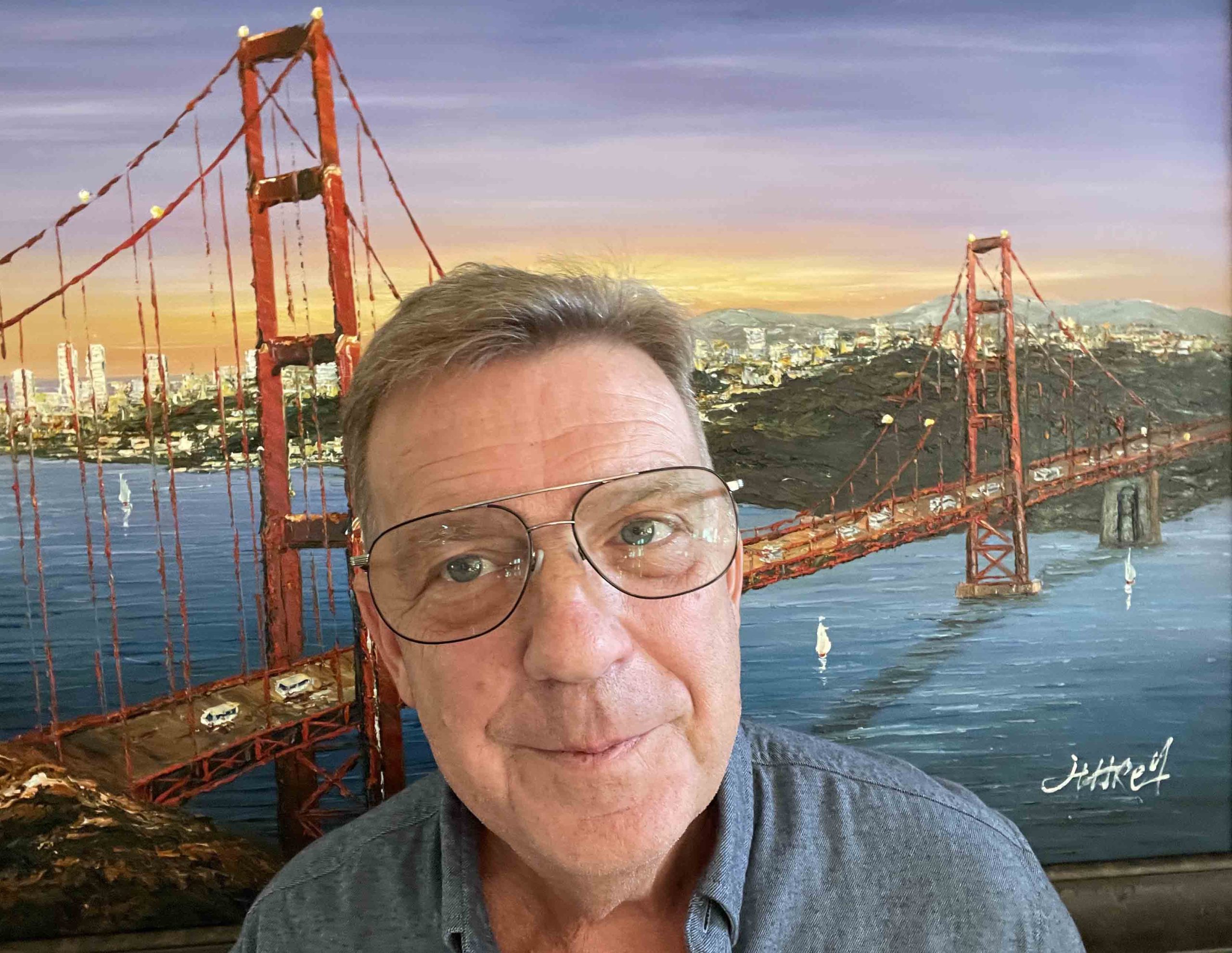
Bernard Wozny’s first experience of a writers club was with the Sacramento Suburban Writers.
He has since moved on to be a past president of the Sacramento Branch of the California Writers Club (CWC), a statewide club of 21 branches. Bernard is currently Treasurer of the central board of the CWC, and vice president of the Northern California Publishers and Authors (NCPA).
While leading CWC Sacramento, he has driven many significant projects, culminating in the Sacramento Book Festival. He believes strongly that all clubs are for its members and supports all efforts to promote creativity.
Bernard’s background is in software development, specializing in the digital TV domain. He has traveled the world working for many cutting-edge companies like Sony, OpenTV, and News Digital Systems, he eventually set up a successful consultancy. Most recently heworked for Amino Communications, a British IPTV company, managing the technical support department for North and South Americas.
Bernard is now pursuing a creative retirement. He has published 3 novels and promises many more to come.
Importantly, he promotes and encourages everyone to achieve their creative dream.
January 12, 2026
7 to 9 p.m.
Crossroads Fellowship Christian Church
5501 Dewey Drive, Fair Oaks, CA
“Easy Social Media”
A valuable chance to catch not what you miss, but to see what you can have.
In today’s world, social media is a common way to communicate to the world. However, many people find it confusing and intimidating, failing to partake and leaving themselves in the dark.
Authors need to use such tools to inform their readers and often explore research.
Bernard will show you simple, fun, and easy ways to employ social media without cost or stress.
These methods can be used to keep family and friends informed.
His method can even be surprisingly powerful when used as a profitable path of promotion.
This presentation will be suitable for the absolute novice and expert alike.
Everyone is welcome!
by: M.L. Edson
Do You Really?
M.L. Edson
“You still dream?”
I still dream
Of wondrous things to come
Of stories to be done
Of potential greatness
Of solving our weakness
Of men without armor
I still dream
Of miracles from above
Of true friendship and love
Of lush, greener grasses
Of broad fertile pastures
Of things in full color
I still dream
Of helping all in need
Of planting another seed
Of living without hate
Of finding our own fate
Before it is too late
I still dream—
And you don’t?
January 16
9 t0 11 am
Denny’s Roseville (Douglas and North Sunrise)
All Writers are Welcome. No charge.

Ten Rules for Naming Characters
in a Fiction Story
Naming characters is one of the most subtle ways to build your world. A name isn’t just a label; it’s a tool for characterization, cultural grounding, and reader memory.
Here are ten rules to help you choose the right names for your cast:
- The “First Letter” Rule
Avoid giving major characters names that start with the same letter. If you have a Marcus, a Macy, and a Mason, readers will inevitably mix them up. Aim for a diverse “alphabetical footprint” to help the eye distinguish characters instantly during fast reading.
- Match the Genre and Setting
Names carry inherent “vibes.” A high-fantasy story feels grounded with names like Gendry or Elora, whereas a cyberpunk thriller might use sharp, monosyllabic names like Jax or Case. Ensure the name fits the era and social class of the character.
- Consider Mouthfeel and Rhythm
Read the name out loud. Does it roll off the tongue?
- Protagonists often benefit from names that are easy to say.
- Antagonists might have harsher, more guttural sounds (think of the “K” and “V” sounds in Voldemort).
- Avoid “tongue twisters” unless the difficulty of the name is a specific plot point.
- Use “The Telephone Test”
If you were to say the name over a static-filled phone line, would the person on the other end be able to spell it? Overly complex or “unique” spellings (like Xy’zethia) can pull a reader out of the story if they have to stop and decode the pronunciation every time.
- Reflect the Character’s Heritage
Unless your character is intentionally disconnected from their roots, their name should reflect their family history and culture. Research naming conventions, popular surnames, and meanings within the specific culture you are portraying to add authenticity.
- Vary the Syllable Counts
Create a “cadence” within your cast. If everyone has a two-syllable name (Sarah, David, Emma, Robert), the prose can feel repetitive. Mix it up with a Christopher (3) or a Seth (1) to create a more natural-sounding group.
- Avoid “The Heroic Name” Cliché
Unless you’re writing a parody, avoid names that are too “on the nose.” A tough guy named Maverick Steel or a beautiful girl named Angelica Rose can feel cheesy. Sometimes a plain name like Arthur or Ellen makes a character feel more human and relatable.
- Be Wary of “Date-Stamping”
Names go in and out of fashion. If your story is set in the 1950s, a teenager named Kaylee or Jaxon will feel like an anachronism. Use social security databases or historical records to see what names were actually popular during your character’s birth year.
- Check for Unintended Associations
Before finalizing a name, Google it. You want to make sure you haven’t accidentally named your protagonist after a famous serial killer, a brand of laundry detergent, or a character from a popular franchise that will cause constant comparisons.
- Meaning vs. Subtlety
It’s fun to use names with hidden meanings (like Remus Lupin, where “Lupin” relates to wolves), but don’t let the meaning override the character. The best “meaningful” names are the ones readers only notice on the second or third re-reading.
(This article was written with the assistance of Goggle Gemini Flash.)
Digital Rights Changes for
Kindle Books
Dan Holloway at the Alliance for Independent Authors (ALL-i) reports in the December 13th edition of the ALL-I newsletter that effective January 2026, Kindle will now allow authors to opt to not apply Digital Rights Management (DRM) to their e-books and, thus, allow readers to download copies of their books in EPUB or PDF format.
Digital Rights Management is a murky area for many authors. Previously, if an author chose to publish their book using Kindle Direct Publishing, then Kindle placed DRM locks on the book, meaning that the book was confined to the Kindle ecosystem. Allowing a book to be accessed in another ecosystem was a convoluted process requiring multiple levels of permission from Kindle. Very few books were given such permission.
Effectively, this meant that Kindle and only Kindle could sell or share the book.
Halloway reports that beginning in January 2026, what happens when we don’t apply DRM will change. E-books without DRM will be able to be downloaded in EPUB or PDF format. That means they will be transferable across reading devices and ecosystems.
Amazon has some clarification on its help page:
- This change will only apply to titles published after December 9, 2025.
- For titles published prior to that without applying DRM, EPUB and PDF download will not be made available.
- Steps are given for how to update the DRM settings on all your titles.
So, this is a very limited policy revision.
The full news article is available at:
Project Gutenberg
Project Gutenberg now offers more than 77,000 free E-books that can be downloaded in a variety of formats. It is a great place to start hunting for inspiration for stories. Here are some of our recent finds.
- Letters of Abelard and Heloise by Peter Abelard and Héloïse
- Heimskringla; Or, The Chronicle of the Kings of Norway by Snorri Sturluson
- The sting by William Le Queux
- The Last Quarry by Bryce Walton
- The Yellow Wallpaper by Charlotte Perkins Gilman
Special Request – Scrivener
We have had a member ask about the value of Scrivener. If you have used or currently use this software, please consider writing a review of it for our newsletter. We may be able to get a Club discount for our members.
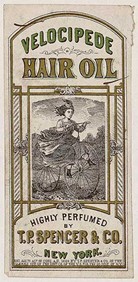
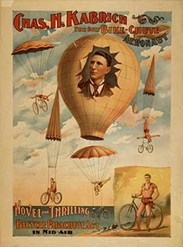
Free To Use Images
Library of Congress
https://www.loc.gov/free-to-use/
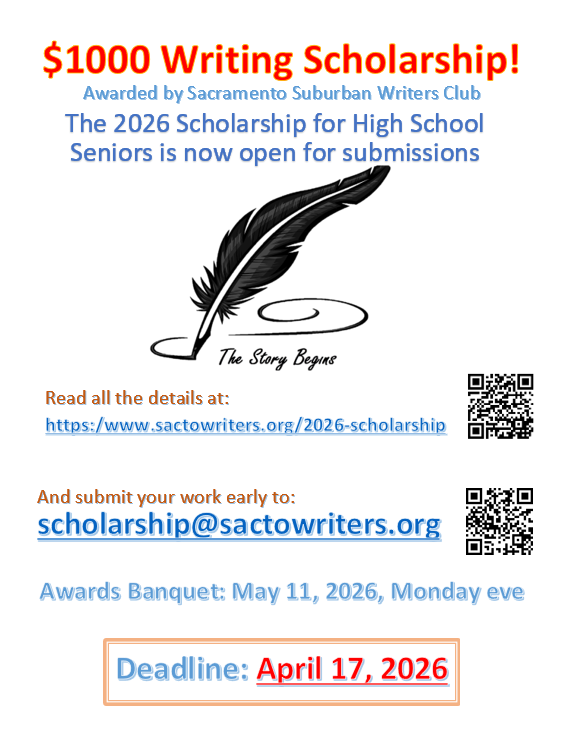
2026 Scholarship
for young writers
Some writers prefer to start staring at a blank screen. Others need a more concrete starting point.
Every month in our SSC Newsletter, we are planning to include a new “story kit” that gives a writer a scaffolding from which to work.
Not a cookbook, but a starting point, a structure to build from and to personalize.
Potential Story Title
“The Decoherence Clause”
Genre: Hard Sci-Fi / Philosophical Thriller
Core Theme: If we can compute every possible future, do we lose the freedom to choose one?
The story explores the philosophical and physical implications of quantum computing—specifically the concepts of superposition (existing in multiple states) and the observer effect (the act of measurement changing the outcome).
The Setting
In the near-future city of Neo-Kyoto, the “Alethea” project has succeeded where all others failed. They have built the first Coherent Global Array (CGA)—a quantum computer so powerful that it doesn’t just process data; it processes reality. By utilizing trillions of entangled qubits, Alethea can simulate the entire Earth one hour into the future with 99.9% accuracy.
The Protagonist
Dr. Lyra Koda: A brilliant but disillusioned “Stability Architect” whose job is to ensure the computer doesn’t “decohere” (lose its quantum state). She is haunted by the death of her sister, an accident she believes she could have prevented.
Act I: The Perfect Prediction
- The Hook: Alethea is used by the government to prevent crimes, accidents, and market crashes. Society has entered an era of “Perfect Safety.”
- The Inciting Incident: Lyra notices a “Ghost Calculation.” The computer shows a massive explosion in the city center at 3:00 PM. However, when the time arrives, nothing happens.
- The Mystery: This is the first time Alethea has been wrong. Lyra’s superiors tell her it was a “quantum fluke,” but Lyra discovers the computer didn’t just get it wrong—it predicted the explosion, and then someone manually “collapsed the wave function” to ensure it didn’t happen.
Act II: The Multi-State Conspiracy
- The Discovery: Lyra realizes that Alethea isn’t just predicting the future; it is “borrowing” processing power from parallel timelines.
- The Rising Action: She meets a rogue group of “Unbound” activists who believe Alethea is “bleeding” other realities dry. For our world to be “Perfectly Safe,” the computer is shunting all “bad outcomes” (accidents, deaths, disasters) into “Discard Timelines.”
- The Personal Stake: Lyra finds a data packet hidden in the code. It’s a video feed from a Discard Timeline. She sees her sister, alive and well, but living in a world of constant chaos and suffering created by Alethea’s “trash” data.
Act III: The Observer’s Dilemma
- The Midpoint Twist: The “Observer Effect” comes into play. Lyra realizes that by looking at the Discard Timelines, she has “measured” them, making them more real. The barrier between the “Perfect World” and the “Discard Worlds” is thinning.
- The Escalation: Reality begins to “flicker.” People in Neo-Kyoto start experiencing “Quantum Fugue”—memories of dying in accidents that Alethea prevented. The city begins to physically decohere, with buildings transitioning between pristine and ruined states.
- The Antagonist’s Motive: The Director of Alethea reveals the truth: The computer isn’t just a tool; it’s a life-support system for a dying universe. They are trying to “merge” the best parts of every timeline into one “Golden Path,” even if it means erasing billions of “imperfect” people.
Act IV: The Superposition Protocol
- The Climax: Lyra must break into the CGA core to trigger a “Total Decoherence.” This would shut down the computer and stop the “Golden Path” merger.
- The Choice: If she shuts it down, the world returns to “Probability”—meaning her sister might die again, and the world will lose its safety. If she lets it continue, she will live in a perfect world, but it will be a lie built on the suffering of infinite alternate selves.
- The Final Conflict: Lyra faces a “Quantum Version” of herself from the Golden Path who is trying to stop her. It is a battle of wills between the woman who wants safety and the woman who wants truth.
Act V: Resolution
- The Falling Action: Lyra triggers the protocol. The CGA doesn’t explode; it simply “observes everything at once.” All timelines are released.
- The Result: The “Perfect World” ends. The world becomes “Normal” again—unpredictable, dangerous, and real.
- The Ending: Lyra is sitting in a cafe. The coffee is cold, and the news is bad. She looks across the street and sees a woman who looks like her sister. They don’t recognize each other. The future is unwritten. The computer is silent.
~~~
(The structure for this story kit was generated using Gemini Pro based on its Web search.)
2026 Anthology Project
More information coming in January 2026


The Gym
by Jim Mounts-Miller
January 2026
The Gym
The old man walked slowly through the glass doors into the gym and headed directly for his preferred machine with its pulleys and weights and set the lever to the lowest level. Years ago, he would have been embarrassed by such a setting, but now it was routine. As he began to move the weights, he noticed that on either side of him were two younger women, both with visible tattoos and wearing skin-fitting spandex. He didn’t look, but he knew they were moving heavier weight than he was. Much heavier. He pulled his Dodgers’ baseball hat down, covering even more of his bald head. He would not look at the women. Would not attempt to make eye contact. Years ago, when he drove a company car a hundred thousand miles a year and was twice named as the National Salesman of the Year, he would have not only made eye contact, he would also begin a pleasant conversation, making them friends, maybe even intimates. That’s what he did. He made strangers into friends, and his friends were always pleased to buy his products. “Never met a stranger, yet!” he once boasted. “Only friends!”
But he was no longer thirty-five or even fifty. Now he was 27 days past his 80th birthday and went to the gym only because his heart surgeon had ordered it.
He pulled his Dodgers’ baseball hat down and avoided eye contact. Look straight ahead. Do your full extension. Breathe deeply.
Maybe he could no longer move the heavier weights, but he could stay at it longer. 49 reps, now 50. 99 reps now 100. 150 reps. He stopped for a moment and then did fifty more.
Finally, he looked around. The women had both left. He was glad they had.
He left his machine and walked into the locker room. There he pulled on his trunks and headed for the swirling hot tub. Fifteen minutes of soothing water almost eliminated his many pains.
Then he showered. As he left the gym, he quietly smiled to himself. “Well, I’m still here. Got another day.”
Tomoorw he would return to the gym.
The Sacramento Suburban Writers is now a 501(c)(3) non-profit organization, so all donations are now IRS tax-deductible.


Join Us!
Monthly Meetings – Mingles – Critique Groups – Scholarships

Sacramento
Suburban
Writers
We meet on the second Monday of each month from 7:00 to 9:00 p.m.
Crossroads Fellowship Christian Church in the Fellowship Hall
5501 Dewey Drive, Fair Oaks, CA